Context and Scope in JavaScript
Learn the difference between scope and execution context, and how this affects this, closures, and debugging.
Context and Scope in JavaScript: Similar Terms, Different Jobs
Introduction
Scope and context are often mixed up, but they solve different problems. Once you separate them clearly, debugging this, closures, and callback behavior becomes much easier.
What is scope?
Scope defines which variables are accessible from a given part of your code.
Common types:
Global ScopeFunction ScopeBlock ScopeLexical Scope
const appName = 'portfolio';

function showMessage() {
  const title = 'Context vs Scope';

  if (true) {
    const version = 'v1';
    console.log(appName, title, version);
  }

  console.log(appName, title);
}
What is context?
Context is about how a function is executed and what this refers to at runtime.
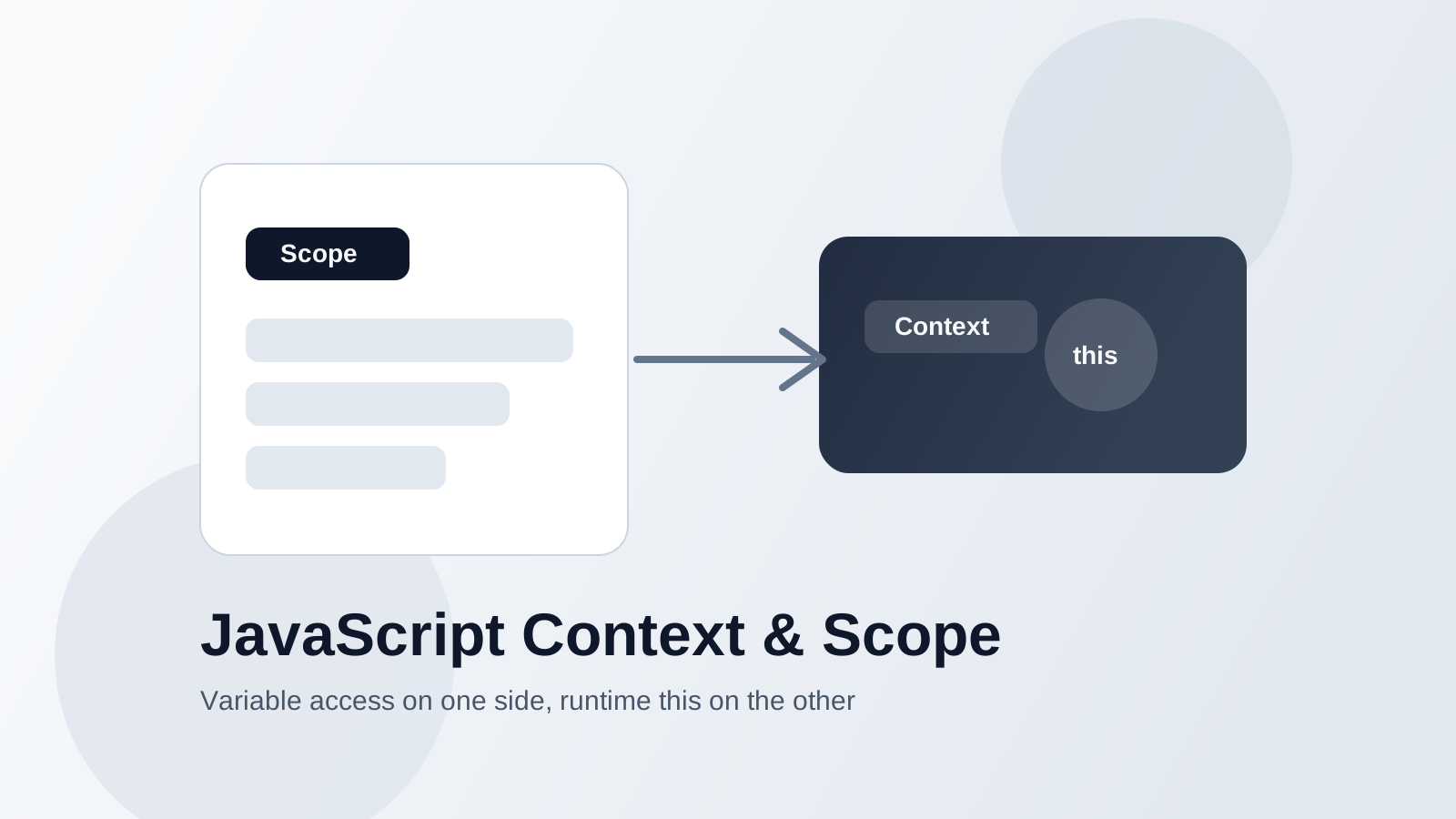
Scopeanswers: "Which variables can I read here?"Contextanswers: "What isthisright now?"
const user = {
  name: 'Karo',
  greet() {
    console.log(this.name);
  },
};

user.greet();
Scope vs context
| Concept | Main question | Example |
|---|---|---|
Scope | Which variables can I access? | count, config, name |
Context | What is this right now? | window, undefined, an object |
A common context bug
const counter = {
  count: 0,
  increment() {
    this.count += 1;
  },
};

setTimeout(counter.increment, 1000);
Passing the method directly loses its original context. Fix it with an arrow function or bind.
setTimeout(() => counter.increment(), 1000);
setTimeout(counter.increment.bind(counter), 1000);
Scope and closures
Closures come from lexical scope. A function can keep access to variables from its outer function even after that outer function has finished executing.
function createCounter() {
  let count = 0;

  return function () {
    count += 1;
    return count;
  };
}
Arrow functions and context
Arrow functions do not create their own this. They inherit it from the outer execution context, which makes them useful inside callbacks.
Quick debugging rule
- Missing variable: usually a
scopeissue - Broken
this: usually acontextissue - Access to outer variables later on: likely a
closure
Summary
Scope is about variable access. Context is about the runtime value of this. Knowing the difference helps you write cleaner JavaScript and debug faster.